
Mobile milling · Site guide
How to Prepare
for Milling Day
ON MILLING DAY
Staging & site prep
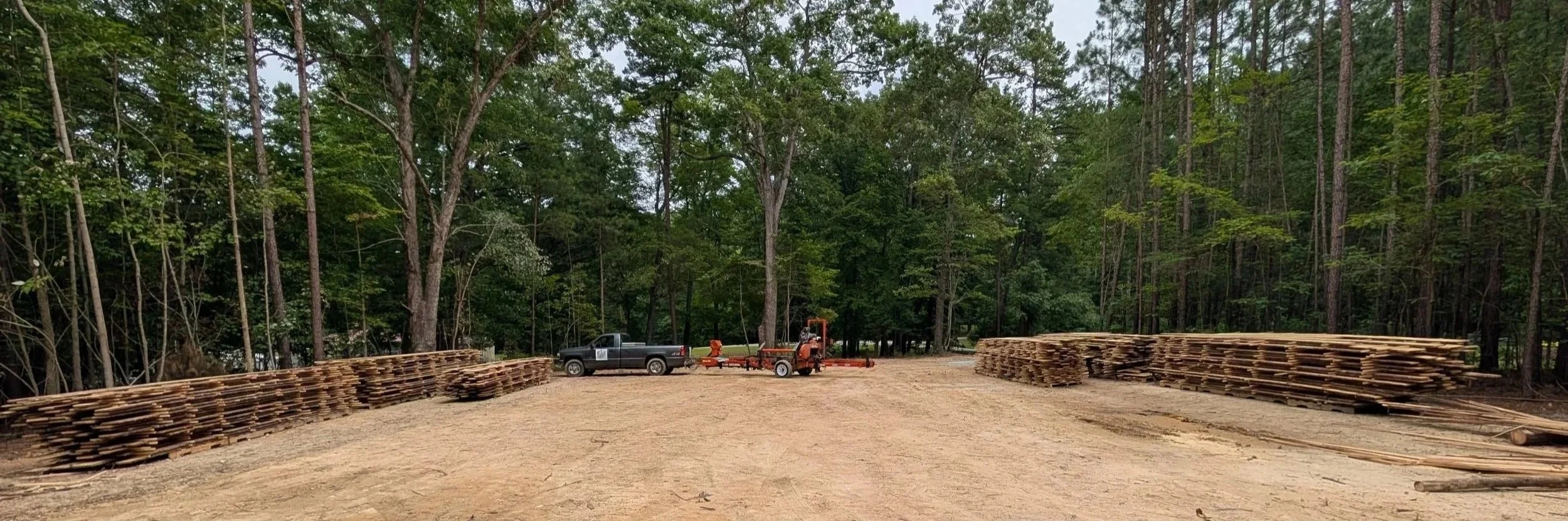
The site should be flat, clear of debris and obstacles, and large enough to maneuver and set up a 30ft trailer and truck.
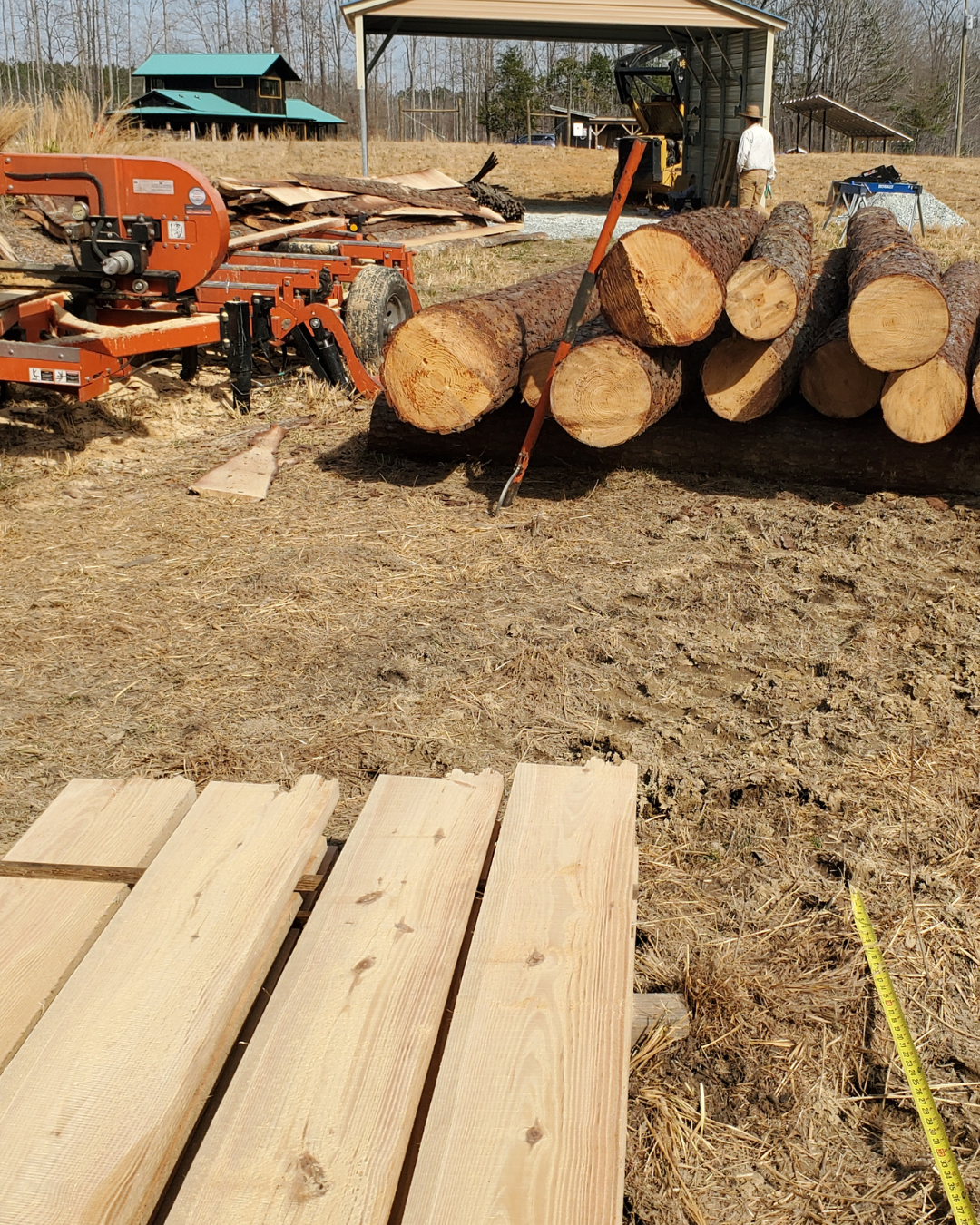
Logs should be staged in the milling area in an organized pile, ideally stacked them off the ground to minimize dirt and moisture. The goal is to be able to roll the logs from the pile one at a time onto the sawmills hydraulic loading arm.
ON MILLING DAY
how to be efficient
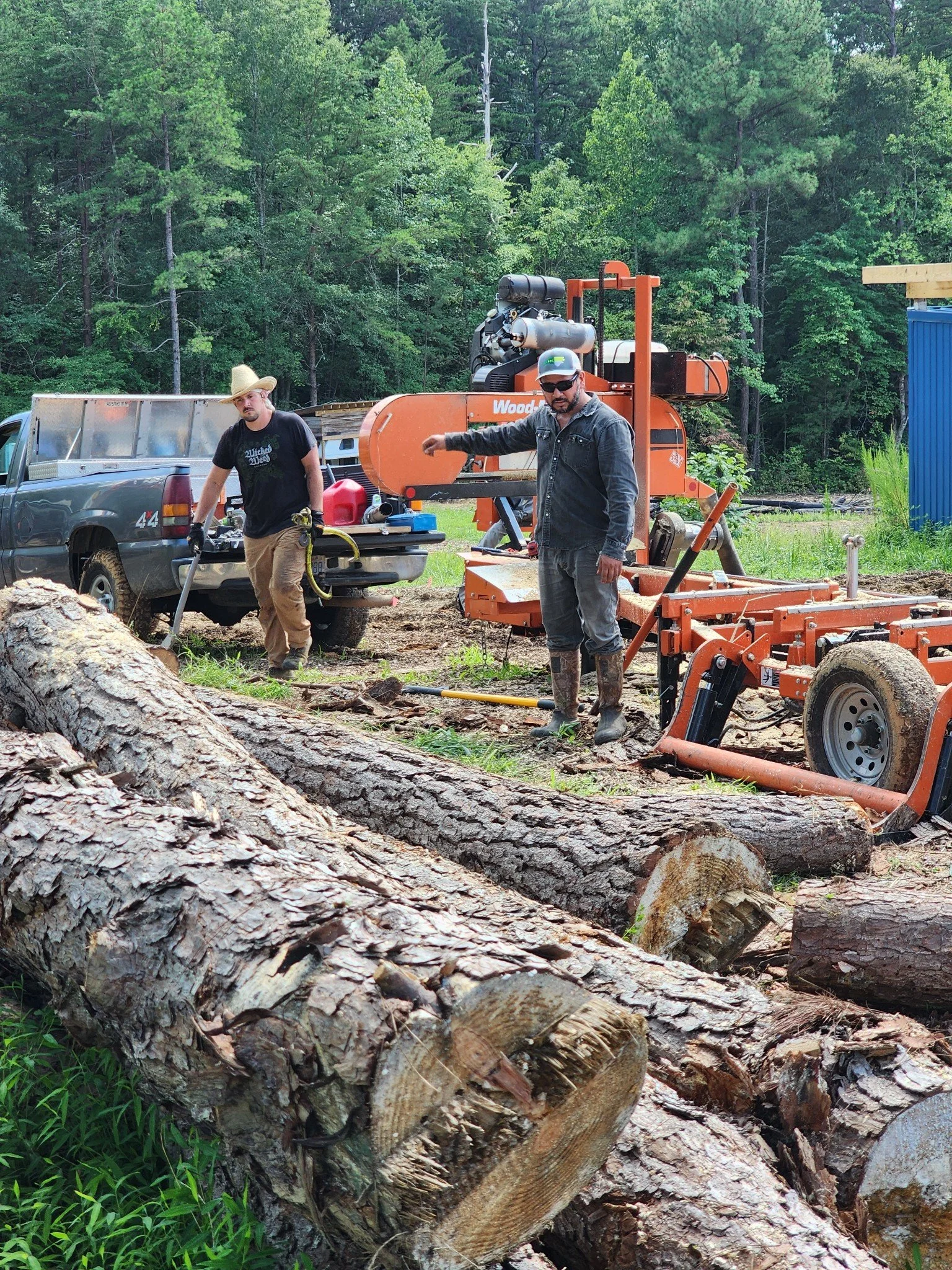
Prepare the next log for milling, pull boards quickly, and organize the finished lumber.
Stack waste and freshly cut lumber close to the mill to minimize unnecessary movement and maximize efficiency.
Pay attention to all instructions given by your sawyer to keep things moving smoothly.
ASSEMBLE YOUR CREW
Recruit two or three helpers to provide supplemental labor on milling day. Your team will help move logs, and move and stack lumber.
Make sure you have sturdy work shoes, gloves, and hearing and eye protection.
BEFORE MILLING DAY
safety rules
01
stay alert and engaged
Milling involves heavy machinery and hard work. Communicate with Pete and stay engaged with the process.
03
Manage the Work Area
Keep the area tidy to prevent accidents, and always be mindful of your surroundings.
04
Learn the Workflow
We will establish a clear workflow at the start. Follow instructions and adapt as needed.
02
Learn the Hand Signals
The sawmill is loud, so I will go over basic hand signals to communicate during the process. Stay attentive and watch for these signals.
QUESTIONS
Milling Day FAQ
Still unsure about something? Call or email before your milling date.
-
While not required, having equipment like a tractor or skid steer can greatly speed up the process of moving logs and lumber.
-
Logs should be staged near the milling area and stacked off the ground to minimize dirt and moisture. Make sure there is space for equipment to move freely around the logs.
-
No, logs do not need to be debarked, but removing dirt, rocks, and debris from the bark helps protect the sawmill blades and ensures a cleaner cut. It is also helpful to be aware of any potential metal in the logs.
-
The site should be flat, clear of debris and obstacles, and large enough to maneuver and set up the 25ft trailer and truck to the logs.
-
Basic protective gear for working around the sawmill includes safety glasses, hearing protection and sturdy footwear.
Good work gloves and long pants are also strongly recommended. -
Yes, we can cut to your desired dimensions within the capacity of the mill. Let us know your specifications before we start.
If you do not have specific criteria, I am happy to help you decide what will be most useful to you or how to generally maximize the value and usefulness of the yield from your logs. -
Milling produces a significant amount of sawdust and slab wood. You are responsible for managing the waste. Plan to have a disposal method or a designated area for piling the waste.
-
The time required depends on the number of logs, their size, and your desired cuts. On average, we can mill 300-500 board feet per hour with an efficient setup.